
Fairs
Updated on 11/12/2025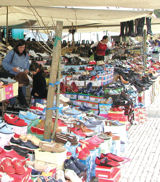
According to Pinho Leal, in Portugal Antigo e Moderno (1886), Vila Verde already had an important fair in 1706, held on the 13th of each month, in addition to a Cattle Fair which, alternating with Pico de Regalados, took place every 15 days.
Today, these two fairs have merged into one, held every 15 days, alternating between Vila Verde and Pico de Regalados, with the cattle component taking place exclusively in Pico de Regalados.
The Vila Verde Fair continues to have a major impact on the economic and social life of the municipality. It maintains the typical characteristics of such events, where movement, color, and the sound of street vendors’ calls blend with a great variety of products. Clothing and footwear, household goods, agricultural tools, and food products such as meat, fish, bread, and sweets are some examples.
Although the presence of plastic and mass-produced goods is also evident at the fairs, it is still possible to find some artisanal items as well as traditional agricultural products. One highlight—an emblematic specialty of Vila Verde—is the sale of roosters for the delicious “pica no chão” chicken rice.
Socially, the fair continues to be extremely important because it provides opportunities to meet neighbors and friends who are not seen in daily life. Conversations revolve around the most varied topics: the weather, harvests, births and deaths, weddings, festivals, and both national and local politics.
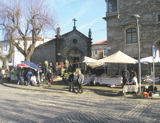
On December 13th, at the Chapel of Saint Anthony, located in the center of Vila Verde, the day of Saint Lucy is celebrated. The day begins with the celebration of the Eucharist, followed by various expressions of devotion to this saint, who, according to the people, is the advocate of the eyes.
The faithful kiss the image of the saint and offer donations, which can be personal objects such as glasses and photographs, or wax figures usually representing the human face. It is also customary to pass a white handkerchief over the saint’s face, which is then passed over one’s own eyes.
Next to the Chapel, a small fair takes place, characterized by the sale of agricultural products, especially those associated with the Christmas season: traditional sweets, figs, and other dried fruits. Also important is the sale and exchange of honey, which currently gives the fair its name: the Honey Fair or Saint Lucy Fair.
This festival, felt throughout the town, has been known since 1706 and, according to the Parish Memories, was once considered one of the most important events in the municipality, lasting two days.
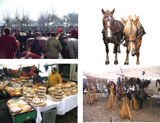
On January 20th, the Feira dos Vinte (Twentieth Fair) takes place in the town of Prado, also known as the Donkey Fair and the Barter Fair.
It coincides with the festivities in honor of Saint Sebastian and attracts many thousands of visitors. The presence of animals, especially horses, and related accessories is one of the most characteristic features of the fair.
Also noteworthy is the Night of Tastings, which involves sampling wines from the latest harvest. This is a very old tradition that the local population strives to preserve. Agricultural and domestic products, clothing, sweets, and food and drink stalls are also always present.
It is believed that this fair derives from the one established by King Dinis in Prado in 1307. Being the first of the year, it served as a reference for the prices that would be applied in the buying and selling of livestock throughout the year. Together with the Prado Fair, held every Tuesday, it remains an event of great importance for the economy of the municipality of Vila Verde.
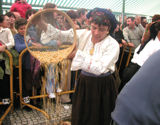
The municipality of Vila Verde, in collaboration with cultural, recreational, and sports associations, folklore groups, institutions, and schools, organizes every year, on the second weekend of October, the Harvest Festival “Regional Products Fair-Exhibition.”
This event consists of a wide range of activities: spaces for selling regional products, talks and lectures on various topics, craft exhibitions, contests featuring local products, and presentations of traditional customs and practices.
Its main objective is to promote the municipality, its culture, and its artisanal and agricultural products. The growing interest of farmers, artisans, merchants, and tourism operators has helped project this event both regionally and among foreign communities twinned with Vila Verde.
Notably, “Lenços de Namorados” (Lover’s Handkerchiefs), lace, and embroidery are products that gain particular prominence, along with basketry, wooden toys, ceramics, and weaving. Visitors can watch artisans at work, interact with them, and learn about the technical processes involved in preparing these various products.
Traditional and organic agricultural products, as well as gastronomy, have increasingly taken a central role. In particular, initiatives are held to promote certain products, such as quince jelly, honey, corn bread, traditional sweets, chouriço, and homemade chicken, through increasingly popular competitions. Livestock and vineyards, being highly important products in the municipality, also receive special attention to improve quality.
The “Pica no Chão” chicken rice is the festival’s highlight dish, being one of the signature dishes promoted during the event, accompanied by traditional soups. These are showcased during the “caurdo” festival. These “caurdos” are based on traditional recipes, many of which have disappeared from contemporary cuisine.
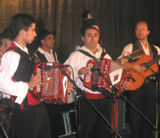
The promotion of customs and traditions related to agricultural activities is also one of the main objectives of the fair. In this regard, there are demonstrations of legends, corn husking and threshing, and flax spinning and retting.
Traditional games, singing duels, Portuguese folk music, traditional band performances, folklore groups, and accordion gatherings are regular features that both the people of Vila Verde and visitors greatly enjoy.
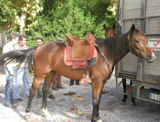
In the first days of November, the Feiras Novas (New Fairs), also known as the Saints’ Fair, take place in the town of Pico de Regalados. This free fair has centuries-old traditions dating back to the time of King Dinis.
Here, visitors can find a wide variety of agricultural products, household items, and clothing. However, the main attraction is the livestock fair, featuring the sale and exchange of horses, donkeys, and cattle.
Improvised food and drink stalls offer various traditional delicacies, including Minho-style pork cubes (rojões), sarrabulho porridge, fried cod, liver strips with onions, grilled chicken and octopus, and caldo verde, all accompanied by the region’s fine white or red Vinho Verde. These treats delight both locals and visitors alike.
Cultural and sporting entertainment is also part of the fair, with activities including folklore groups and singing duels. Horse races, both at a trot and at a gallop, are gaining more and more followers each year.