
Natural
Updated on 27/11/2025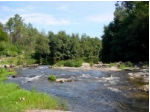
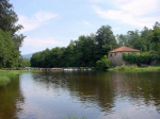
Located in the Minho Region, the municipality of Vila Verde encompasses some of the most picturesque landscapes of this area.
The natural beauty, faithfully reflected in its name, Vila Verde, offers a wide variety of visual perspectives, whether along paths covered with vine trellises, in rural mountain settlements, or on roadways from which extensive panoramas are generally visible.
This is due to the morphological diversity, where, in the north, the mountainous barrier forms a natural amphitheater, granting the municipality excellent sunlight exposure.
Although much of the original natural landscape has been altered by human occupation to meet cultivation needs, this occupation, so wisely integrated into the environment, has only enriched it, although a process of landscape degradation has been observed in recent years.
The lowland area of the municipality, consisting of the valleys of the Cávado and Homem rivers and their tributaries, as well as the Neiva valley, has been regularly adapted for cultivation. Residential and agricultural support buildings form a dispersed habitat, with large manor houses linked to farming. Connected to communication routes and the resulting markets, small urban-type settlements emerged: Vila de Prado, Vila Verde, and Pico de Regalados.
The mid-slope areas have undergone terracing and soil modification, while in the higher, more mountainous zones, the scarcity of arable land has led to the formation of small concentrated settlements, such as Cabaninhas, Azedo, Mixões da Serra, or Porrinhoso.
The introduction of new species of continental, Atlantic, and Mediterranean flora, which found a favorable environment here, gradually replaced the original vegetation.
Maritime pine and, more recently, eucalyptus have been replacing oak, chestnut, and other vegetation that once dominated the mountainous areas. This replacement of flora, along with fires, pesticide effects, and hunting, has directly contributed to the gradual decline of several regional fauna species (wolf, wild boar, roe deer, fox, hare, rabbit, birds of prey, moorhens, etc.), which, despite their high hunting potential, now face survival challenges.
In the highland areas, considerable zones remain where primitive elements still prevail, requiring special care for their protection.